BalanceBikeToddler
Travel Stroller for Airplane
What actually matters in a stroller you fold at the gate: folded size, weight, one-hand fold, and recline. How to pick one that stays with you.
By BalanceBikeToddler Editorial Team ·
Short answer: What actually matters in a stroller you fold at the gate: folded size, weight, one-hand fold, and recline. How to pick one that stays with you.
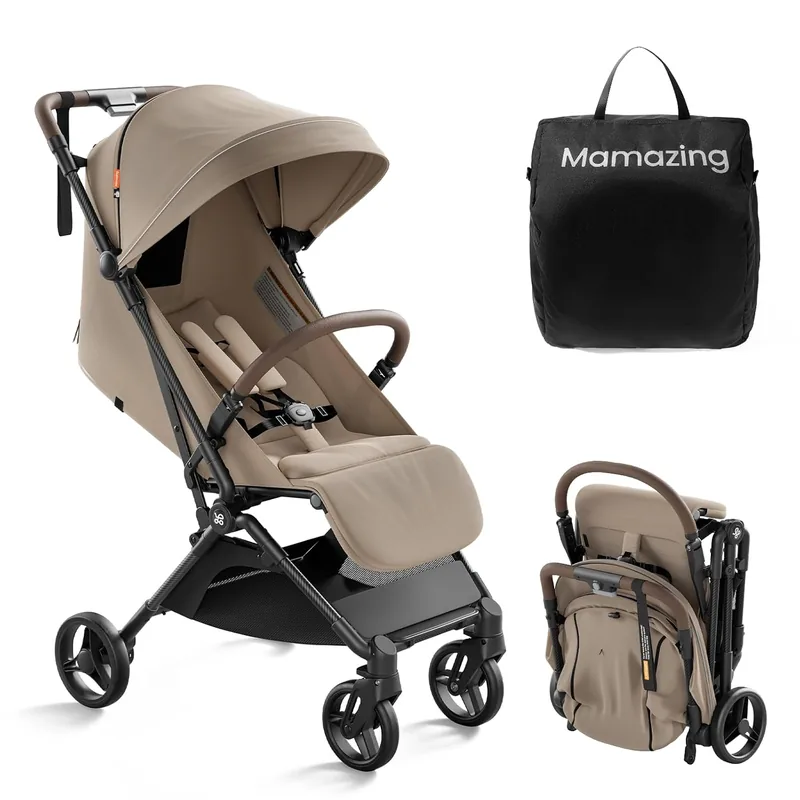
Airlines let you bring a stroller to the gate for free, but the stroller that survives a trip is not the one that looks good in the living room. This guide covers what actually matters when you need a stroller that folds small, weighs little, and still carries a tired toddler through an airport.
Why travel changes the rules
An everyday stroller is judged on ride comfort and storage. A travel stroller is judged on two numbers: folded size and weight. Most airlines accept a stroller at the gate regardless of size, but if it does not fit in the overhead bin you will gate-check it, and gate-checked items get thrown, not carried. The stroller you can fold to under about 22 by 13 by 9 inches and lift with one hand is the one that stays with you.
What to check before you buy
- Folded dimensions. Measure the folded stroller, not the open one. A stroller that folds to a flat brick beats one that folds to a long tube for bin fit.
- Weight. Under 15 lb is easy to carry while holding a child; under 10 lb is manageable on a shoulder.
- One-hand fold. You will have a child on one hip and a bag on the other. A two-hand fold at the gate is a public struggle.
- Recline. A near-flat recline lets a baby sleep through a delay; a rigid upright seat does not.
- Carry strap or bag. Gate-check without a bag means the fabric takes the abuse.
Age and fit
For a newborn, check the recline reaches flat and the harness is a true five-point. For a toddler, a simple upright travel stroller is enough, and weight matters more than cushioning. The newborn stroller guide covers flat-recline models, and the umbrella vs full-size guide explains where travel strollers sit on the spectrum.
The trade you are making
A travel stroller trades suspension and storage for portability. It is the right primary stroller if you fly or take transit often, and the right second stroller if your full-size stays home. It is the wrong only stroller if you run or tackle rough paths, so see the all-terrain guide.
Safety at the airport
Always brake it before letting go on a slope, and never hang a heavy bag on the handles. A loaded handle tips a light stroller backward. The stroller safety guide lists the checks that apply everywhere, not just travel.
Further reading
Related Reviews
Products Mentioned in This Guide
- Dream On Me Aero Travel Umbrella Stroller, One-Hand Quick Fold, 3-Point Safety Harness, Dual Brakes, Adjustable Removable Canopy, Lightweight Compact & Space-Saving, for 6 to 36 Months – BlackSource-based score, full specs & safety checklist for the Dream On Me Aero Travel Umbrella Stroller, One-Hand Quick Fold, 3-Point Safety Harness, Dual Brakes, Adjustable Removable Canopy, Lightweight Compact & Space-Saving, for 6 to 36 Months – Black.
- Chicco Bravo 3-in-1 Trio Travel System, Bravo Quick-Fold Stroller with KeyFit 30 Infant Car Seat and Base, Camden/BlackSource-based score, full specs & safety checklist for the Chicco Bravo 3-in-1 Trio Travel System, Bravo Quick-Fold Stroller with KeyFit 30 Infant Car Seat and Base, Camden/Black.
- Kolcraft Cloud Plus Lightweight Umbrella Stroller for Toddlers with Reclining Seat, Large Storage Basket, Canopy, Infant & Parent Trays, Compact Fold for Summer Travel, Durable Frame, Slate GraySource-based score, full specs & safety checklist for the Kolcraft Cloud Plus Lightweight Umbrella Stroller for Toddlers with Reclining Seat, Large Storage Basket, Canopy, Infant & Parent Trays, Compact Fold for Summer Travel, Durable Frame, Slate Gray.
Continue browsing the full guide library.