BalanceBikeToddler
Best Kick Scooter 6-8 to School
For the school run, a two-wheel folding scooter beats a toddler model. What to check: fold, weight, wheel size, and a brake that survives daily use.
By BalanceBikeToddler Editorial Team ·
Short answer: For the school run, a two-wheel folding scooter beats a toddler model. What to check: fold, weight, wheel size, and a brake that survives daily use.
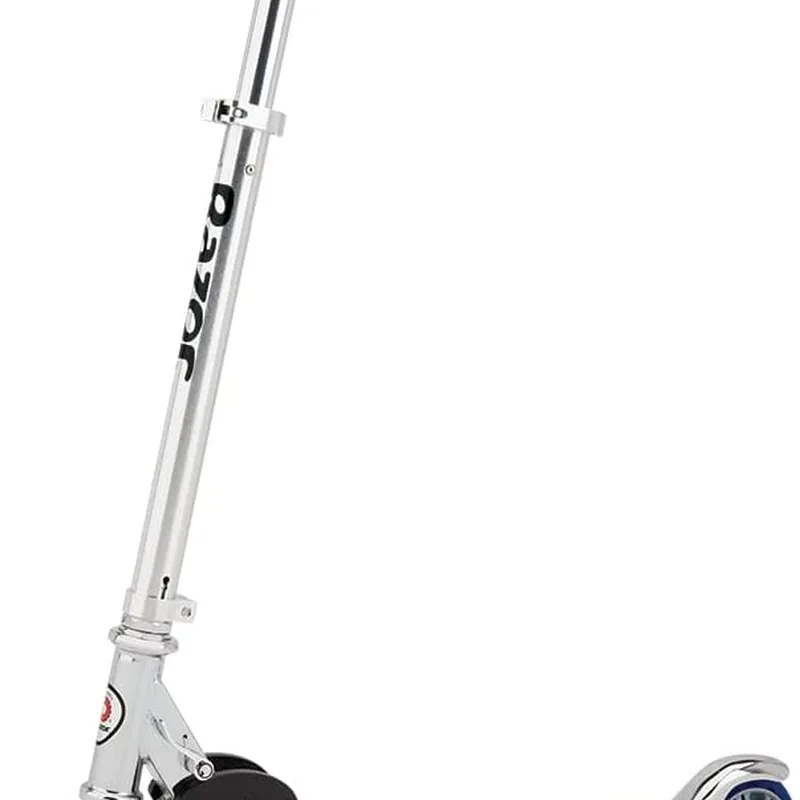
The school run is where a scooter earns its keep: a two-wheel folding model that a six-to-eight-year-old can carry onto a bus and stash at a desk. This guide covers what to look for in a daily commuter scooter.
Two wheels and a real fold
A toddler three-wheeler is too slow and too bulky for this job. A two-wheel scooter that folds to a flat brick and locks closed is what survives a corridor and a cubby. The 3 vs 2 wheel guide explains the step up.
Weight the child can carry
The scooter gets carried as often as ridden. Aim for something the child can lift one-handed; anything heavy becomes yours to carry. A foldable travel scooter is built around this.
Wheels for real surfaces
School routes mix pavement, curbs, and the occasional crack. Wheels of 120-180mm roll these without a jolt; tiny wheels do not. Larger, softer wheels also mean a quieter, less punishing ride.
Brake that lasts
A rear foot brake sees daily use; check that it is metal-faced and not worn thin. A scooter that cannot stop reliably is not a commuter. Compare this against a bike for short trips if the distance is longer than a scooter suits.
Safety on the route
A helmet and pad set is mandatory, and the child should know to walk the scooter across driveways and never ride near traffic. Reflective bits help on dim mornings.
Further reading
Related Reviews
Products Mentioned in This Guide
- Graco SlimFit3 LX 3-in-1 Convertible Car Seat, Slim Car Seat Fits 3 Across, Rear Facing, Forward Facing, to Highback Booster Seat, Perfect for Baby Travel & Gift for New Parents, KunninghamSource-based score, full specs & safety checklist for the Graco SlimFit3 LX 3-in-1 Convertible Car Seat, Slim Car Seat Fits 3 Across, Rear Facing, Forward Facing, to Highback Booster Seat, Perfect for Baby Travel & Gift for New Parents, Kunningham.
- Green Mini 3 Wheel Scooter for Kids – Lean-to-Steer with LED Light-Up Wheels, Adjustable Handlebar, Wide Anti-Slip Deck, SmooSource-based score, full specs & safety checklist for the Green Mini 3 Wheel Scooter for Kids – Lean-to-Steer with LED Light-Up Wheels, Adjustable Handlebar, Wide Anti-Slip Deck, Smoo.
- Jetson Jupiter Kids 2-Wheel Light-Up Kick Scooter, LED Lights on Handlebar, Stem, Wheels & Deck, Adjustable Handlebar, Rear BSource-based score, full specs & safety checklist for the Jetson Jupiter Kids 2-Wheel Light-Up Kick Scooter, LED Lights on Handlebar, Stem, Wheels & Deck, Adjustable Handlebar, Rear B.
Continue browsing the full guide library.