BalanceBikeToddler
2-Seater vs Single Ride On Car
A two-seater carries two kids but drains the battery and hits the weight limit fast. A single-seater is lighter, cheaper, and lasts longer per charge.
By BalanceBikeToddler Editorial Team ·
Short answer: A two-seater carries two kids but drains the battery and hits the weight limit fast. A single-seater is lighter, cheaper, and lasts longer per charge.
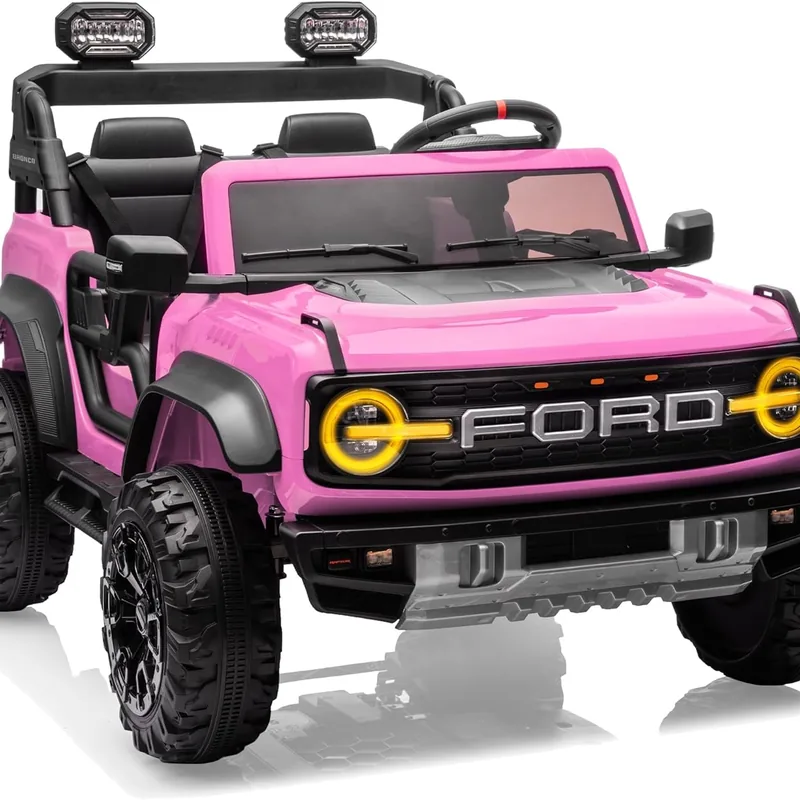
The single-versus-two-seater choice is really a question about how many children will share the car and how far it needs to go. This guide covers the trade.
Two-seater: the shared car
A two-seater carries two children, which halves the number of rides you mediate. But it pulls double the weight, so the weight limit and the battery runtime are the constraints. Two children also fight over who drives.
Single-seater: the longer-lasting car
A single-seater is lighter, cheaper, and runs longer per charge. For one child it is the better buy; for two it means turns. It also accelerates better because it carries less.
Weight and battery math
- Two-seater: near its weight limit with two kids, shorter runtime, needs a bigger battery and often 24V — see the 24V two-seater guide.
- Single-seater: well under its limit with one child, longer runtime, often 6V or 12V.
Which to choose
- One child: single-seater, every time.
- Two close-age kids who will share: two-seater, sized to the combined weight.
- Two kids far apart in age: start single-seater, upgrade later.
Budget reality
Two-seaters cost more; under $200 a single-seater is the realistic option — the under-$200 guide covers that bracket. A remote helps whichever you pick.
Further reading
Related Reviews
Products Mentioned in This Guide
- First Ride On 24V Ride on Toys for Big Kids, Licensed Ford Bronco Raptor 2 Seater Ride on Cars with Remote Control, Ride on Truck w/ 4-Wheeler Suspension, 3 Speeds, Led Lights, Bluetooth (24V, Pink)Source-based score, full specs & safety checklist for the First Ride On 24V Ride on Toys for Big Kids, Licensed Ford Bronco Raptor 2 Seater Ride on Cars with Remote Control, Ride on Truck w/ 4-Wheeler Suspension, 3 Speeds, Led Lights, Bluetooth (24V, Pink).
- Step2 Whisper Ride II Kids Push Car, Ride-On Car with Seat Belt and Horn, Quick Fold Handle, Stroller Alternative, Toddlers aSource-based score, full specs & safety checklist for the Step2 Whisper Ride II Kids Push Car, Ride-On Car with Seat Belt and Horn, Quick Fold Handle, Stroller Alternative, Toddlers a.
- ANPABO Licensed Ford F-150 24V 2 Seater Ride on Car for Kids, 4x100W Motors for All-Terrain Electric Car with Parental Remote, Retro Style, 3-Speeds, Large Storage Box, Music Player, Aged 3-8, BlueSource-based score, full specs & safety checklist for the ANPABO Licensed Ford F-150 24V 2 Seater Ride on Car for Kids, 4x100W Motors for All-Terrain Electric Car with Parental Remote, Retro Style, 3-Speeds, Large Storage Box, Music Player, Aged 3-8, Blue.
Continue browsing the full guide library.