BalanceBikeToddler
Balance Bike Size Chart: Fit by Inseam
How to size a balance bike by inseam instead of age: measuring, seat-height ranges, wheel size, and the growth math that decides useful life.
By BalanceBikeToddler Editorial Team ·
Short answer: How to size a balance bike by inseam instead of age: measuring, seat-height ranges, wheel size, and the growth math that decides useful life.
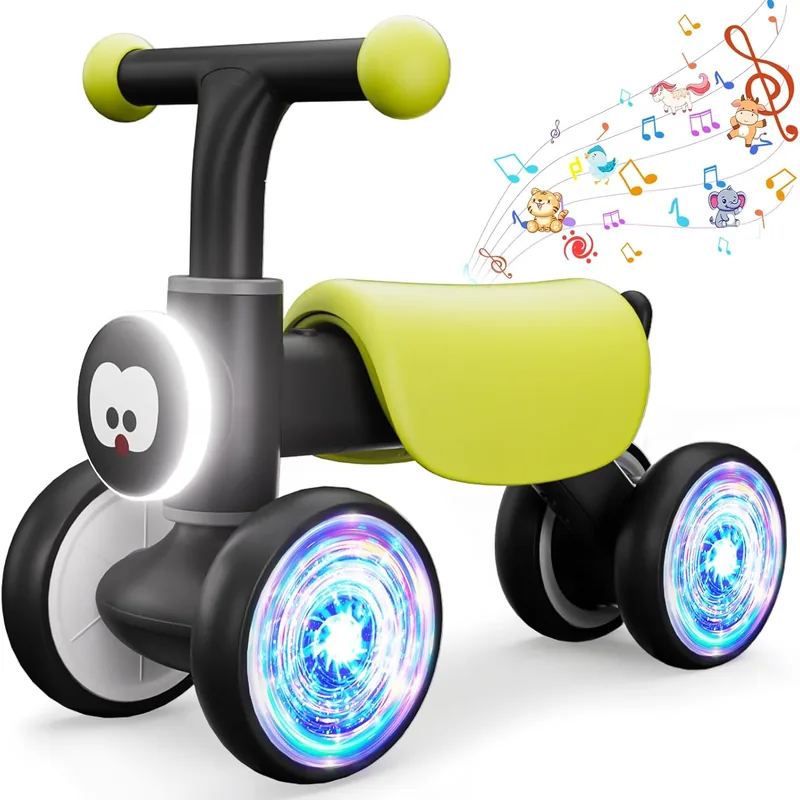
Balance bikes come in more sizes than "one-size-fits-most" marketing suggests, and the single spec that decides whether a bike works is seat height. This guide covers how to measure your child, how to read a size chart, and which wheel size actually matters — the short version: the wheel is mostly a style choice; the seat range is the fit decision.
Why inseam beats age
Two kids the same age can differ by six inches of height, and the spec that decides whether a balance bike works is the rider's inseam — the measurement from crotch to floor. A bike fits when the seat can be set so both feet rest flat on the ground with a slight knee bend. Age is a marketing shorthand; inseam is the measurement.
How to measure (two minutes, no tape gymnastics)
- Have your child stand barefoot against a wall, heels touching.
- Slide a thin book between the legs, snug against the crotch, spine flat against the wall.
- Mark where the book's underside meets the wall and measure from the floor.
That number is the inseam. For the lowest seat position, subtract 1–2 cm (about half an inch) — the rider's hips should not sit below the level where the knees can still bend through a stride.
Reading a size chart without getting lost
A balance bike listing usually gives one of three things:
- A single seat height. Treat it as a starting point, not a range. Fine for a known bike; useless for predicting growth.
- A seat height range (e.g. "adjustable seat, 28–40 cm"). This is the number that matters. Compare the bottom of the range against your child's inseam minus the 1–2 cm clearance.
- Only an age range. Ask the seller for the seat range in writing. A listing that publishes no seat range is a listing that has not answered the fit question.
The seat height target
- Lowest seat position should land at or just below (inseam − 1–2 cm). Any higher and the child tiptoes; much lower and the knees lock.
- Highest seat position should cover at least the coming 12–18 months. A seat that tops out right at today's inseam means the bike's useful life ends before the child outgrows diapers.
- Handlebar reach matters as much as height: the child should reach the bars without leaning forward or locking elbows. On most bikes the bars rise with the seat, so a wide seat range usually means a usable handlebar range too.
Wheel size: the overrated spec
12-inch wheels dominate the category and suit nearly everyone. Smaller wheels (6–10 inch) appear mainly in starter bikes for younger toddlers; larger wheels are rare in balance bikes because the category's job is low-speed balance, not rolling efficiency.
Wheel size affects ground clearance and how easily the bike rolls over cracks and curbs. It does not change the fit — that is the seat's job. A 10-inch bike with the right seat height fits better than a 12-inch bike that is two inches too tall.
Growth math: how long will this bike last
Seat ranges cluster into two useful shapes:
- Narrow (about 8–10 cm of travel). Typical of budget and starter bikes. Expect roughly a year of useful fit per bike.
- Wide (12 cm or more). Typical of mid-range and premium frames. These carry a child from first strides to pedal-bike transition.
Pedal bikes for this age group typically start with a minimum seat height around 35–38 cm, so a balance bike whose seat tops out near that mark has done its whole job.
The five-minute check
- Measure the inseam (book against the wall, two minutes).
- Find the seat height range in the listing — not the age range.
- Confirm the range bottom is at or below inseam − 1–2 cm.
- Confirm the range top carries at least a year of growth.
- Check that handlebar height rises with the seat (it does on most, but not all, frames).
Where to go deeper
Our full balance bike size chart compiles published seat height ranges and inseam targets by model — the data table behind this method. If you are comparing two finalists, the price tiers guide covers what adjustment range costs at each budget level.
Related Reviews
Products Mentioned in This Guide
- Graco SlimFit3 LX 3-in-1 Convertible Car Seat, Slim Car Seat Fits 3 Across, Rear Facing, Forward Facing, to Highback Booster Seat, Perfect for Baby Travel & Gift for New Parents, KunninghamSource-based score, full specs & safety checklist for the Graco SlimFit3 LX 3-in-1 Convertible Car Seat, Slim Car Seat Fits 3 Across, Rear Facing, Forward Facing, to Highback Booster Seat, Perfect for Baby Travel & Gift for New Parents, Kunningham.
- JOYSTAR Angel Girls Bike for Toddlers and Kids Ages 2-13 Years Old, 12 14 16 18 20 Inch Kids Bike with Training Wheels & Basket, 20 24 Inch Girls Bicycle with Handbrake & KickstandSource-based score, full specs & safety checklist for the JOYSTAR Angel Girls Bike for Toddlers and Kids Ages 2-13 Years Old, 12 14 16 18 20 Inch Kids Bike with Training Wheels & Basket, 20 24 Inch Girls Bicycle with Handbrake & Kickstand.
- JOYSTAR 12 14 16 18 Inch Kids Bike for 2-9 Years Girls, Toddler Girls Bike with Training Wheels, Rainbow Bikes, Children BicySource-based score, full specs & safety checklist for the JOYSTAR 12 14 16 18 Inch Kids Bike for 2-9 Years Girls, Toddler Girls Bike with Training Wheels, Rainbow Bikes, Children Bicy.
Balance bike reference pages
- Balance bike size chartSeat height, wheel diameter and inseam fit, measured per model.
- What buyers sayWhat the buyer-sentiment summaries mention, where they hedge, and what they cannot tell you.
- Which models fit at each ageEach maker's age range, where coverage thins out, and how to turn a birthday into a fit check.
- Stable track balance bikeWheel spacing, steering limiters and the four-wheel trade-off — published by one in thirteen.
- Weight and buildBike weight against child weight, with frame and tire material.
- Safety standards referenceWhat EN 71, ASTM F963 and CPSC actually require of a balance bike.
- Balance bike recall recordCPSC and EU Safety Gate alerts with dates, hazards and remedies.
- Budget & value balance bikeWhat each price tier buys, the frame, tire and weight trade-offs, and the checks that separate a cheap bike worth keeping.
Continue browsing the full guide library.