BalanceBikeToddler
Best Balance Bike for a 1-Year-Old: Guide
By BalanceBikeToddler Editorial Team ·
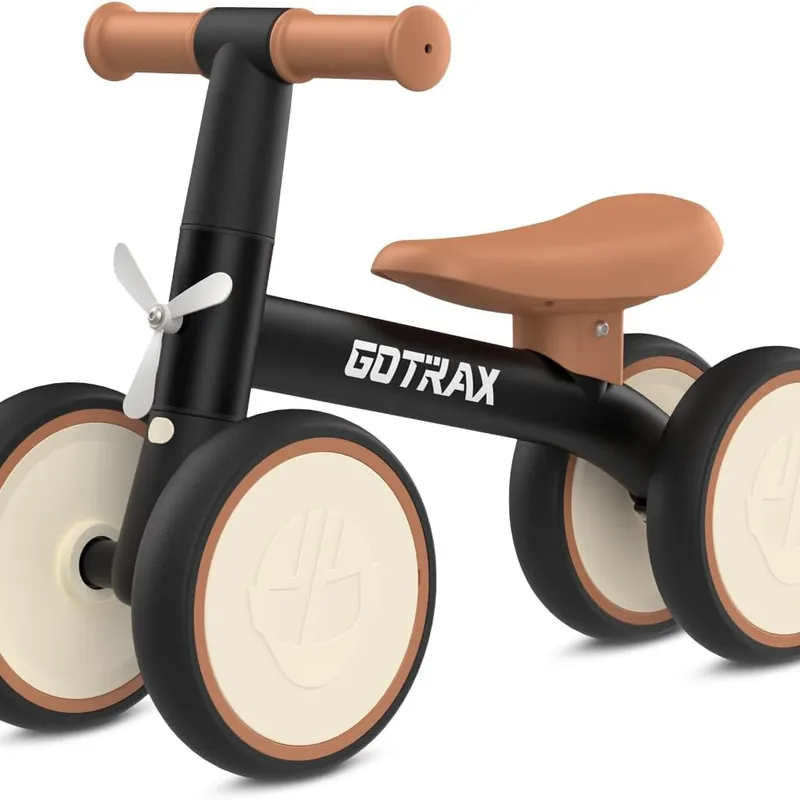
For toddlers around 1 year old (approx. 10–24 months) who are just learning to stand and walk, a Baby Balance Bike (1-year-old ride-on) is an ideal tool for developing motor coordination, vestibular sense, and balance. Unlike two-wheeled balance bikes for older kids, 1-year-olds have developing vestibular systems and muscle strength, requiring specific design and safety standards.
Four Key Buying Factors for 1-Year-Old Balance Bikes
Multi-Wheel Support & High Stability (3 or 4 Wheels)
Design Requirement: Two-wheeled bikes are strictly not recommended for 1-year-old beginners. Choose a four-wheel or wide three-wheel design to provide lateral support and prevent side tip-overs before the child masters balance.
Anti-Oversteer (Steering Limit Design)
Safety Standard: The handlebar must feature a 135° steering limit to prevent side flips. Without a limiter, sharp turns or sudden pulls on the handlebar can lock the front wheel and cause the bike and child to pitch forward.
Ultra-Lightweight & Child-Safe Materials
Weight Limit: Keep the total bike weight under 2 kg (4.4 lbs) or within 30% of the child's body weight. An overly heavy bike can press against the child during a fall or discourage them from riding due to difficulty pushing it.
Safety Details: The frame should have rounded edges without sharp corners, non-toxic soft rubber handlebar grips, and fully recessed screws.
Low Standover Height & Silent Wheels
Seat Height: Minimum seat height should be between 20–25 cm (7.8–9.8 in), ensuring both of the toddler's feet can rest completely flat and securely on the ground.
Tire Choice: Opt for EVA foam silent wheels. They are airless, offer steady grip, and suit indoor hardwood floors or flat paved surfaces without leaving scratches.
Safety Gear & Accessories
Establish safe riding habits right from day one, even indoors or in small play areas:
Helmet: Use an ultra-lightweight, child-specific helmet certified by safety standards (such as CPSC or CE).
Footwear: Always wear supportive, non-slip closed-toe sneakers. Never let toddlers ride barefoot, in socks, or wearing open-toe sandals.
A 3-Step Guided Learning Method
Phase 1: Walk & Explore
Beginners usually do not sit down right away; instead, they stand over the frame and push the bike forward while walking. Do not force them to sit—let them build confidence at their own pace.
Phase 2: Stride & Glide
Once comfortable with the bike's stability, guide the toddler to sit on the saddle and push forward using alternating foot strides. This phase builds the muscle memory of "pushing = moving forward."
Phase 3: Turn & Stop
In a flat, obstacle-free space, encourage the toddler to steer gently and lean slightly to turn, while learning to stop smoothly by placing both feet firmly on the ground.
Related Reviews
Products Mentioned in This Guide
- Graco SlimFit3 LX 3-in-1 Convertible Car Seat, Slim Car Seat Fits 3 Across, Rear Facing, Forward Facing, to Highback Booster Seat, Perfect for Baby Travel & Gift for New Parents, KunninghamSource-based score, full specs & safety checklist for the Graco SlimFit3 LX 3-in-1 Convertible Car Seat, Slim Car Seat Fits 3 Across, Rear Facing, Forward Facing, to Highback Booster Seat, Perfect for Baby Travel & Gift for New Parents, Kunningham.
- Green Mini 3 Wheel Scooter for Kids – Lean-to-Steer with LED Light-Up Wheels, Adjustable Handlebar, Wide Anti-Slip Deck, SmooSource-based score, full specs & safety checklist for the Green Mini 3 Wheel Scooter for Kids – Lean-to-Steer with LED Light-Up Wheels, Adjustable Handlebar, Wide Anti-Slip Deck, Smoo.
- Step2 Push Around Buggy Kids Push Car, Ride On Toy, Stroller Substitute, Includes Seat Belt & Horn, Made of Durable Plastic,Source-based score, full specs & safety checklist for the Step2 Push Around Buggy Kids Push Car, Ride On Toy, Stroller Substitute, Includes Seat Belt & Horn, Made of Durable Plastic,.
Balance bike reference pages
- Balance bike size chartSeat height, wheel diameter and inseam fit, measured per model.
- What buyers sayWhat the buyer-sentiment summaries mention, where they hedge, and what they cannot tell you.
- Which models fit at each ageEach maker's age range, where coverage thins out, and how to turn a birthday into a fit check.
- Stable track balance bikeWheel spacing, steering limiters and the four-wheel trade-off — published by one in thirteen.
- Weight and buildBike weight against child weight, with frame and tire material.
- Safety standards referenceWhat EN 71, ASTM F963 and CPSC actually require of a balance bike.
- Balance bike recall recordCPSC and EU Safety Gate alerts with dates, hazards and remedies.
- Budget & value balance bikeWhat each price tier buys, the frame, tire and weight trade-offs, and the checks that separate a cheap bike worth keeping.
Continue browsing the full guide library.